Guide
Edmonton Property Tax Calculator & Guide (2026)
How much you'll actually pay, how the City calculates it, and what you can do about it.
2026 Mill Rate
10.3637
per $1,000 assessed
Median Assessed Value
$426,500
residential city-wide
Estimated Median Tax
$4,420
$368/month
Residential Properties
354,979
in Edmonton
Look up your exact bill
Type your address — see your 2026 assessment and tax, instantly
Straight from the City of Edmonton assessment roll. Free, no sign-up — every Edmonton home is covered.
Edmonton Property Tax Calculator
Enter your assessed value — find it on your annual City of Edmonton assessment notice.
Using 2026 residential mill rate
10.3637 per $1,000 of assessed value
Quick select
Estimated 2026 Property Tax
Total Annual Tax
$0
$0/month
- Municipal tax
- $0
- Education requisition
- $0
- Total
- $0
Where your tax goes
Estimate only. Actual tax may differ based on supplementary assessments, local improvement charges, or other levies. Check your City of Edmonton tax notice for exact amounts.
How Edmonton Property Tax Works
Edmonton property tax is based on two things: your home's assessed value and the mill rate. The City assesses every property annually, then applies a rate per $1,000 of that value.
The formula is straightforward:
Property tax formula
(Assessed Value ÷ 1,000) × Mill Rate = Annual Tax
Example: A home assessed at $426,500 × 10.3637 per $1,000 = $4,420/year
The mill rate (from Latin mille, meaning thousand) is the tax rate per $1,000 of assessed value. Edmonton's 2026 residential rate is 10.3637 — effectively about 1.04% of your home's assessed value.
Your tax bill has three components:
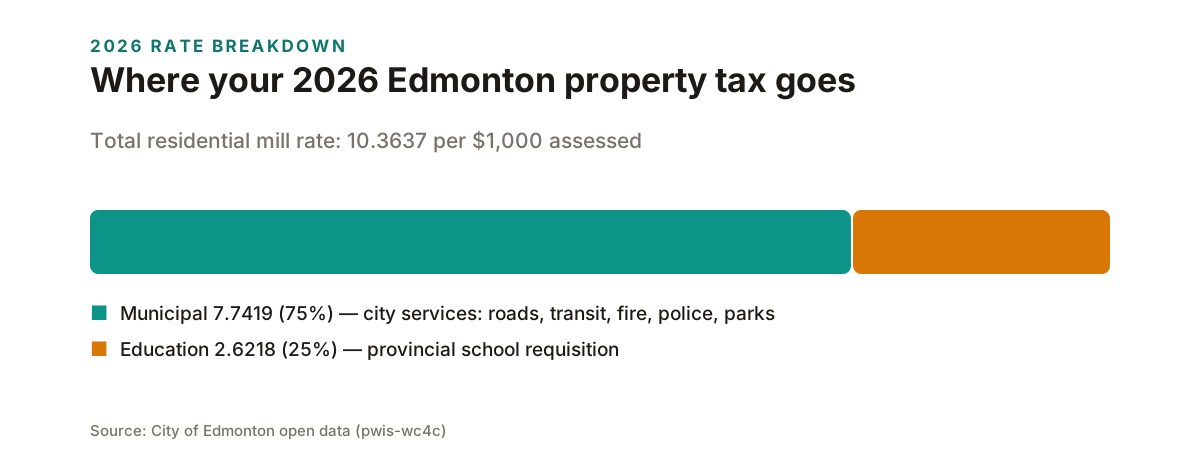
- Municipal tax (7.7419) — Funds City services: roads, transit, fire, police, parks, waste collection
- Education requisition (2.6218) — Set by the Province of Alberta for public and separate school boards (see Alberta's education property tax)
The municipal portion is what City Council controls each budget cycle. The education requisition is set by the Province — the City collects it but doesn't decide the amount.
2026 Tax Rates & Historical Trend
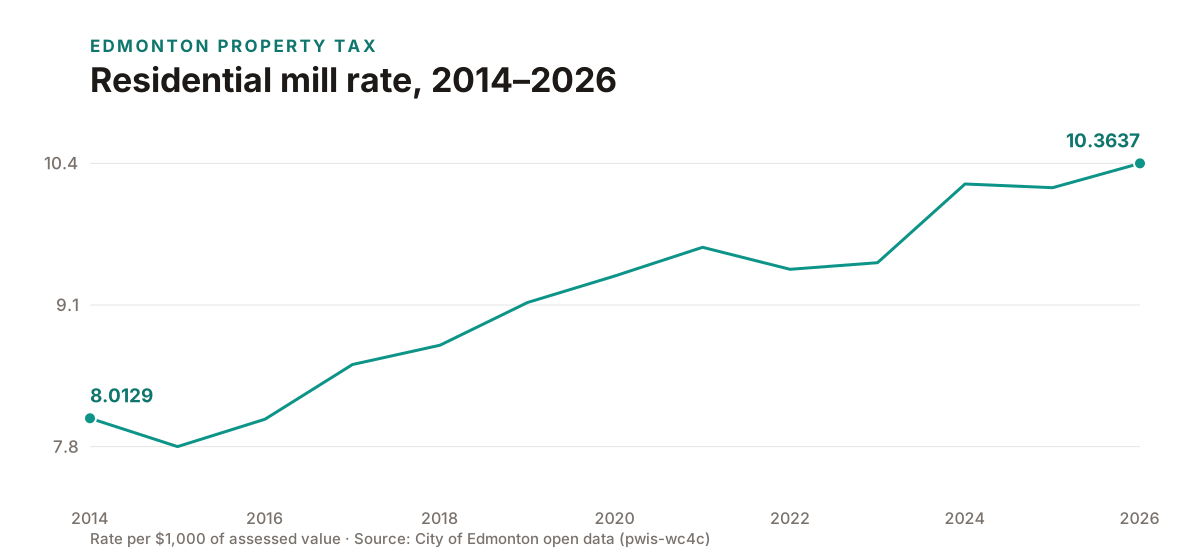
Edmonton's 2026 total residential mill rate is 10.3637. Here's how the components break down and how rates have shifted over the past decade.
Municipal
7.7419
Education
2.6218
Total
10.3637
Historical Mill Rates (2014–2026)
Property Tax by Neighbourhood
Tax amounts vary dramatically across Edmonton — not because of different rates (the mill rate is the same city-wide), but because assessed values differ. A home in a premium neighbourhood is assessed higher, so the dollar amount of tax is higher.
These are Edmonton's top 15 neighbourhoods ranked by median assessed value, with estimated annual tax based on the 2026 mill rate.
| Neighbourhood | Median Assessed | Est. Annual Tax | Properties |
|---|---|---|---|
| Westbrook Estate | $1,232,750 | $12,776 | 332 |
| Windsor Park | $1,128,750 | $11,698 | 544 |
| Hays Ridge Area | $1,068,000 | $11,068 | 457 |
| Grandview Heights | $963,000 | $9,980 | 362 |
| Riverview Area | $932,500 | $9,664 | 145 |
| Quesnell Heights | $912,250 | $9,454 | 124 |
| Crestwood | $772,750 | $8,009 | 886 |
| Oleskiw | $766,000 | $7,939 | 1,071 |
| Ogilvie Ridge | $759,500 | $7,871 | 361 |
| Laurier Heights | $756,500 | $7,840 | 957 |
| Donsdale | $753,500 | $7,809 | 605 |
| Glenora | $743,000 | $7,700 | 1,505 |
| Lansdowne | $728,500 | $7,550 | 355 |
| Henderson Estates | $710,000 | $7,358 | 622 |
| Mactaggart | $702,500 | $7,280 | 1,244 |
Neighbourhoods with 100+ residential properties. Median assessed value from City of Edmonton open data. Tax estimated using 2026 total residential mill rate (10.3637).
This table stops at 15. Each neighbourhood profile runs the same City assessment data for its own area — the median, how it sits against the neighbourhoods next door, how it has moved since 2015, and the tax that rate produces. Start with assessed values and property tax in Bonnie Doon, or browse every Edmonton neighbourhood profile.
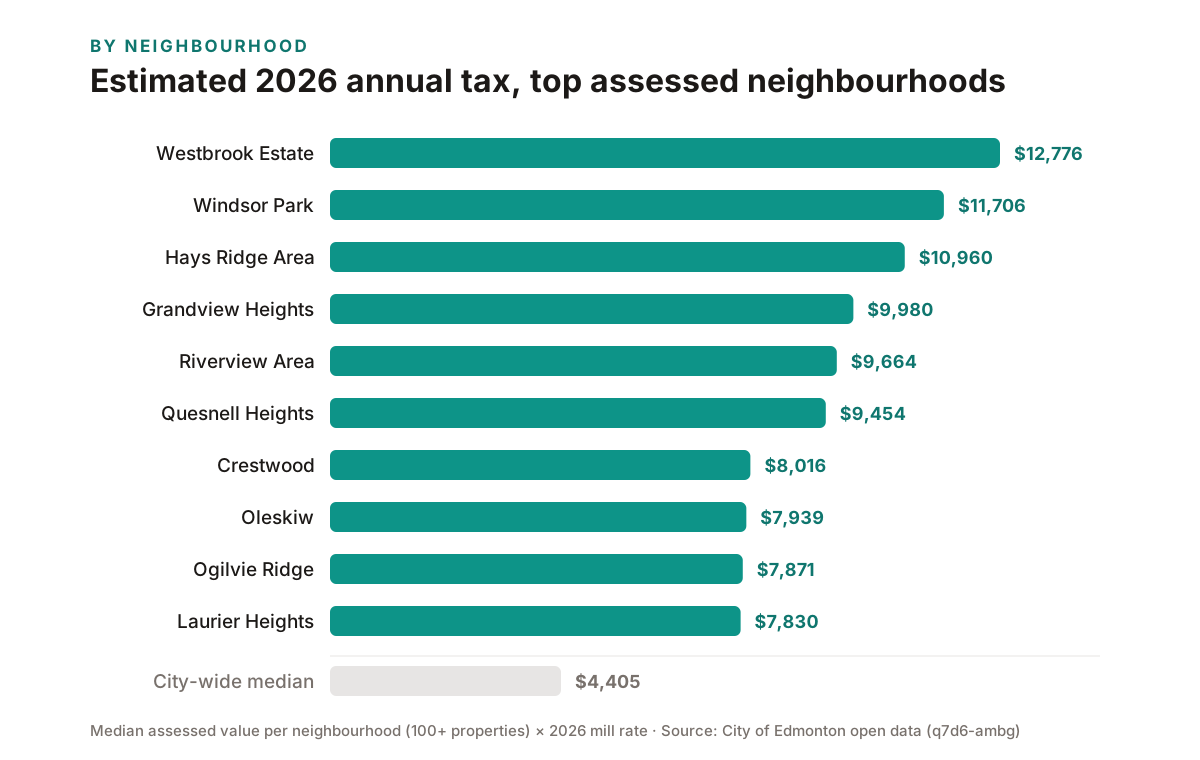
For comparison, the city-wide median assessed value is $426,500 with an estimated annual tax of $4,420. Explore specific areas on our area comparison page.
How Your Assessment Is Determined
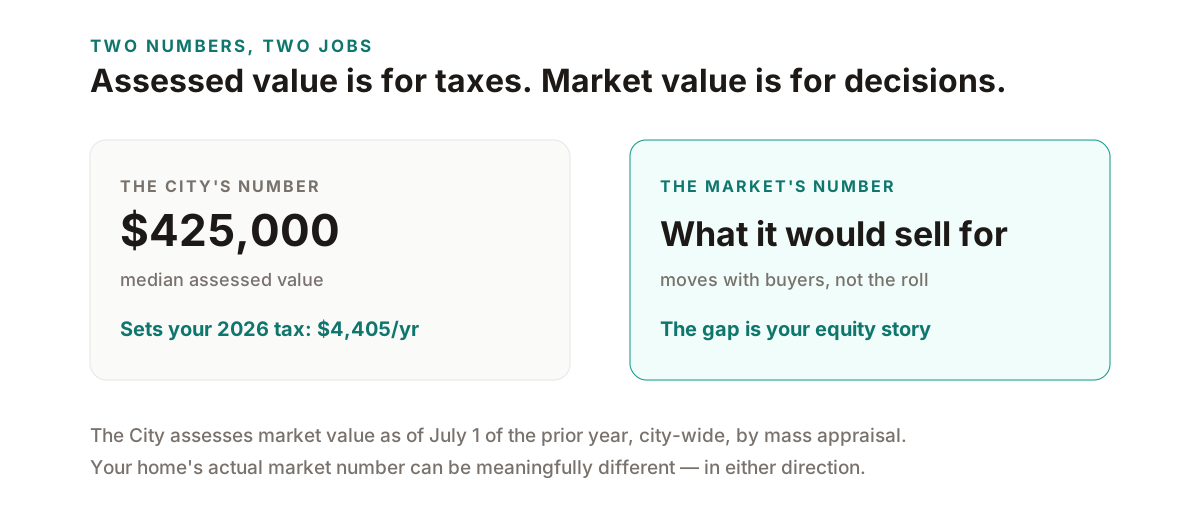
Every year, the City of Edmonton assesses the market value of each property as of July 1 of the prior year. The 2026 assessment reflects what your home would have sold for on July 1, 2025.
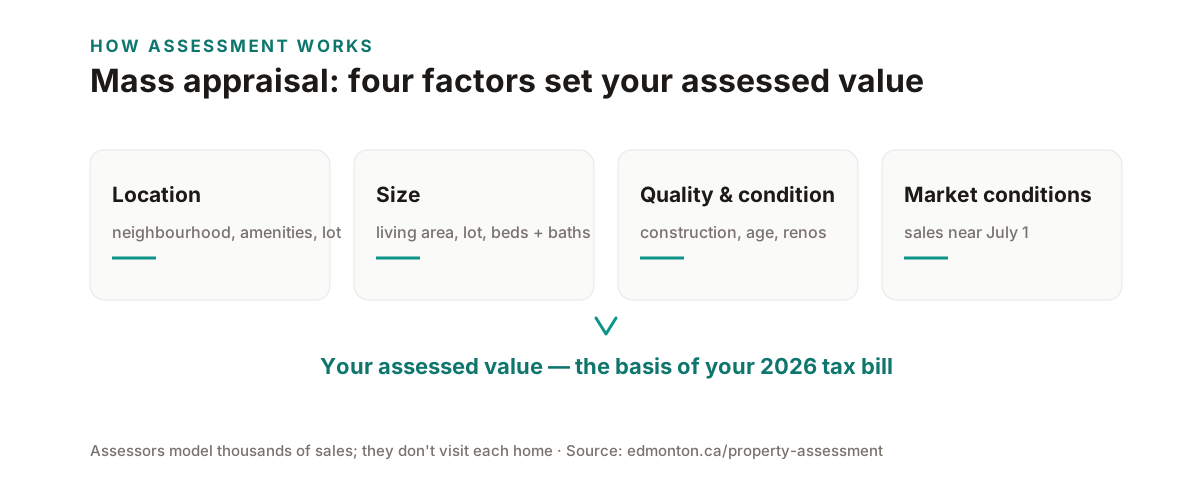
Assessors use a mass appraisal approach — they don't visit every home. Instead, they analyze thousands of recent sales and apply statistical models that account for:
- Location — neighbourhood, proximity to amenities, and lot characteristics
- Size — living area, lot size, number of bedrooms and bathrooms
- Quality and condition — construction quality, age, renovations
- Market conditions — actual sale prices of comparable properties near July 1
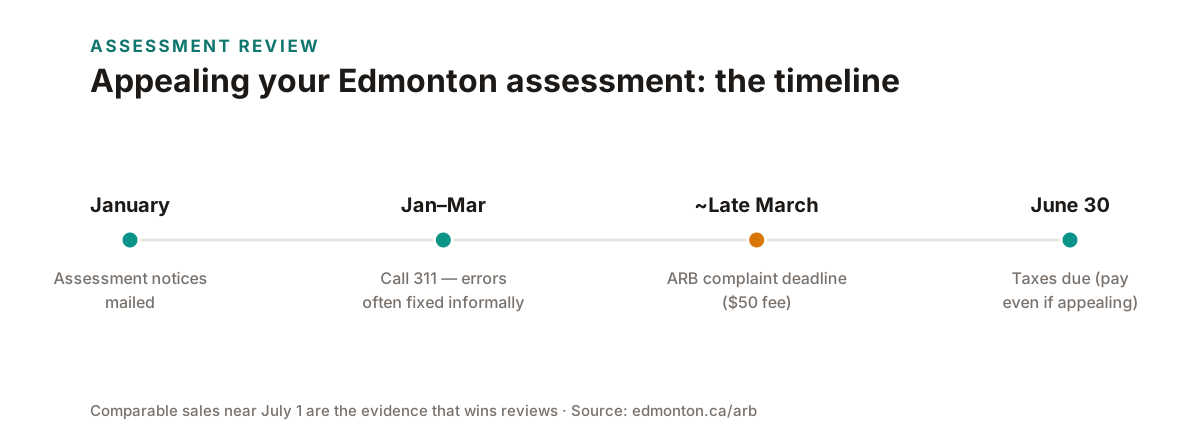
Assessment notices are mailed each January. You can also look up your current assessment on the City of Edmonton property assessment page.
Your assessed value is not the same as your purchase price or your listing price. It's the City's independent estimate of market value — and it can be higher or lower than what you paid.
How to Appeal Your Assessment
If your assessed value seems off, you have the right to challenge it. Roughly 1–2% of Edmonton homeowners file complaints each year — and many succeed.
Step 1: Check your assessment
Compare your assessed value to recent sales of similar homes in your neighbourhood. If comparable homes sold for less than your assessment around July 1, you may have a case.
Step 2: Contact the City first
Call 311 or use the City's online form. Assessors often correct clear errors (wrong square footage, extra garage counted, etc.) without a formal complaint.
Step 3: File a formal complaint
The deadline is typically late March — about 60 days after assessment notices are mailed. You file with the Assessment Review Board (ARB). The fee is $50 for residential properties.
Tips for a successful appeal
- Gather 3–5 comparable sales near the July 1 valuation date
- Document any issues that reduce value (e.g., backing onto a busy road, foundation problems)
- Focus on market value evidence, not your personal opinion of worth
- If you recently purchased, your sale price is strong evidence — but only if it was near July 1
Those are the basics. For the complete walkthrough — what counts as evidence, what the hearing actually looks like, the fee and refund mechanics, and this year's exact dates — read our guide to appealing your Edmonton property assessment.
The Alberta Advantage: No Land Transfer Tax
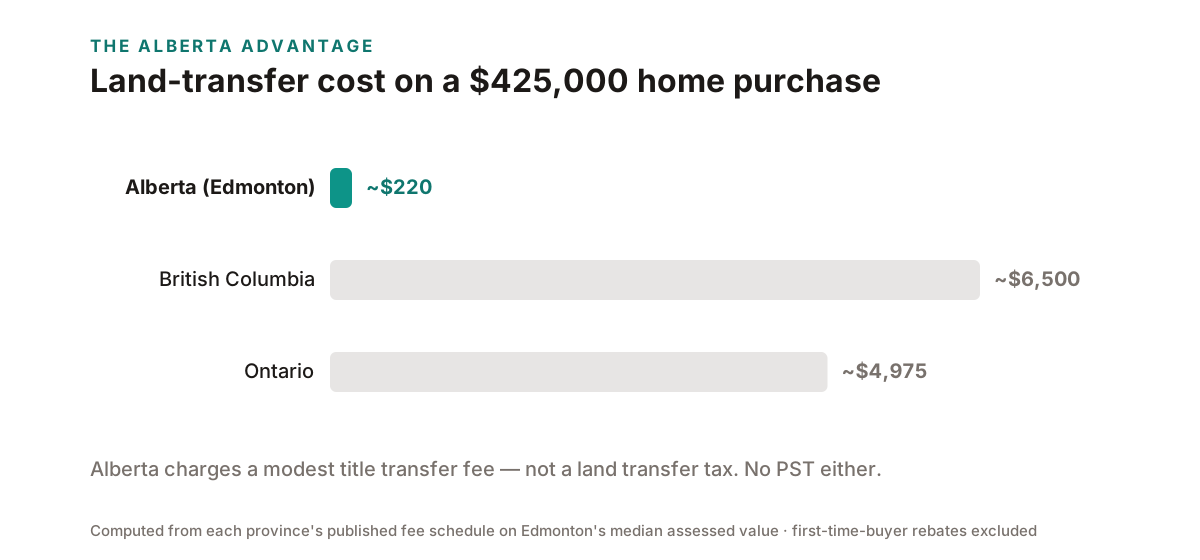
Alberta is one of the few provinces in Canada with no land transfer tax. In Ontario, buying a $426,500 home would cost roughly $6,398 in land transfer tax alone. In BC, even more.
Edmonton buyers pay only a modest title transfer fee (around $50 + $2 per $5,000 of property value) — typically under $250 total. That's thousands less in upfront costs compared to Toronto or Vancouver.
Combined with no provincial sales tax (PST), Edmonton's total tax burden on homeowners is among the lowest of any major Canadian city. That's real money you keep in your pocket.
Frequently Asked Questions
How much are property taxes in Edmonton?
The median Edmonton homeowner pays roughly $4,420 per year ($368/month). Your actual amount depends on your home's assessed value — the 2026 residential mill rate of 10.3637 applies equally to all residential properties. A $350,000 condo pays about $3,627, while a $700,000 detached home pays about $7,255.
How is Edmonton property tax calculated?
Your assessed value is divided by 1,000, then multiplied by the mill rate. The 2026 total residential mill rate is 10.3637, which combines municipal services and provincial education requisitions. The City assesses your home's market value as of July 1 each year, and that assessment is the basis for your tax bill. The Edmonton property tax calculator above does this math for you with the current rates.
What is a mill rate?
A mill rate is the tax charged per $1,000 of assessed property value. Edmonton's 2026 residential mill rate is 10.3637, meaning you pay $10.36 for every $1,000 your home is assessed at. City Council sets the municipal portion each budget cycle; the Province sets the education portion.
Can I appeal my property assessment?
Yes. File a complaint with the Assessment Review Board by late March (about 60 days after notices are mailed). The fee is $50 for residential. Start by calling 311 — assessors often fix clear errors informally. Gather comparable sales near the July 1 valuation date to support your case.
When are Edmonton property taxes due?
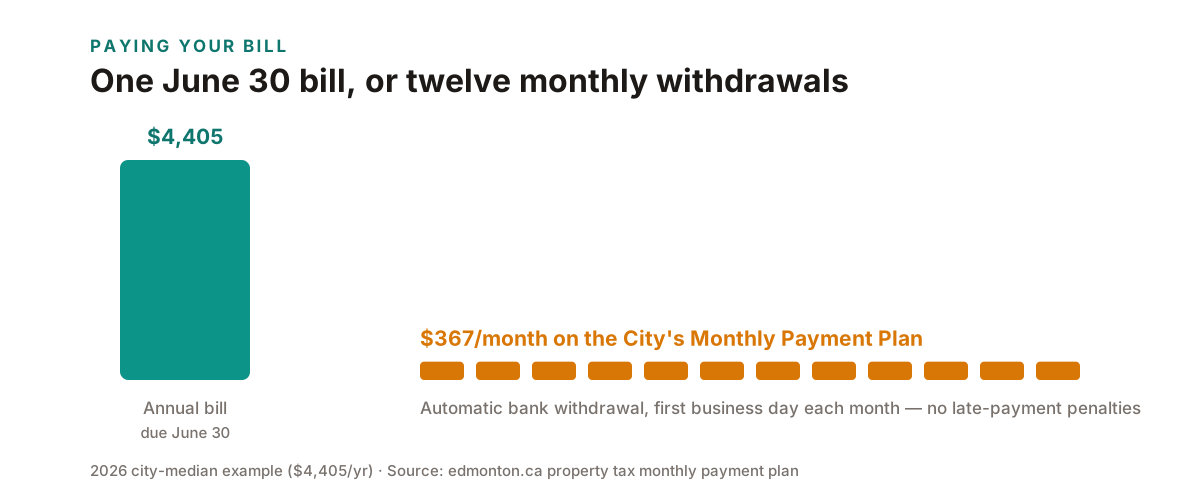
The annual tax bill is due on June 30 each year. You can also enrol in the City's Property Tax Monthly Payment Plan, which spreads payments into monthly instalments withdrawn automatically from your bank account — most homeowners find this easier to budget.
Are Edmonton property taxes going up?
Mill rates have generally trended upward over the past decade, though the year-over-year change depends on City Council's budget decisions and provincial education requisitions. Even when the mill rate stays flat, your tax can increase if your assessed value rises. Use the Edmonton property tax calculator above to see your estimate.
This guide is for informational purposes only. Tax estimates are based on published mill rates and open data assessments. Actual tax amounts may differ due to supplementary assessments, local improvement charges, or other levies. Consult the City of Edmonton or a tax professional for your specific situation.